 +86 16650237703



Author:Kangdi 10-08-2026
Audience: B2B sourcing managers, private label brand owners, OTC category managers, and procurement professionals building a shortlist of cooling gel patch OEM manufacturers in China.
Reading time: 15 minutes
What you'll get: 10 factory profiles, 5 evaluation criteria matrix, 4 sourcing risks to avoid, 5-step supplier qualification framework, and 5 FAQ.
1. The 10 Cooling Gel Patch OEM Manufacturers
This list is compiled from publicly available certification records, regulatory filings, industry directories, and buyer-reported experiences. Inclusion is not an endorsement; buyers must validate each factory independently. Cooling gel patch OEM factories typically operate in one of three configurations: standalone hydrogel specialists, multi-product patch factories (cooling + warming + pain), or full-line OTC medical device factories with patch divisions.
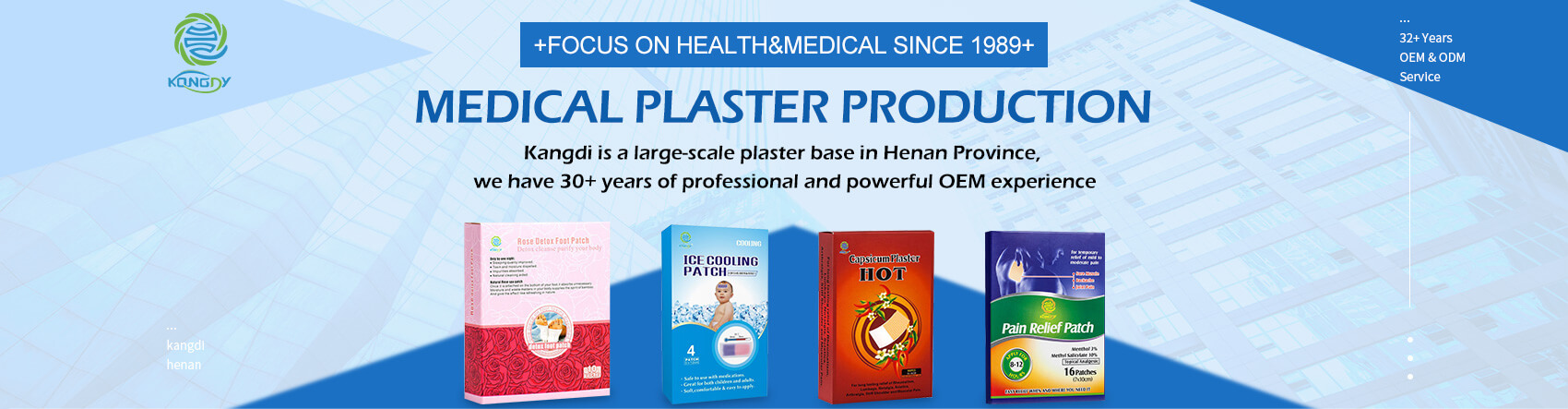
Factory 1 — Henan Kangdi Medical Devices Co., Ltd. (Henan, est. 1989)
Specialty: multi-product patch OEM (cooling gel, warming, pain relief, herbal, hydrogel). Scale: medium-to-large (300+ employees, 8,000+ sqm cleanroom). Certifications: ISO 13485, ISO 22716, China NMPA medical device manufacturing license. Regulatory: FDA Facility Registration, EU CPNP notifications for cosmetic-positioned variants, GCC SFDA registration. Notable: 35+ year track record, 60+ countries served, bilingual project management, supports MOQ from 10,000 units pilot to 1M+ units commercial. Strength: formulation flexibility across cooling, warming, and herbal positioning.
Factory 2 — Shanghai Shine Colour Industrial Co., Ltd. (Shanghai, est. 2009)
Specialty: hydrogel cooling patch and hydrogel face mask OEM. Scale: medium. Certifications: ISO 13485, ISO 22716 (cosmetic). Regulatory: FDA Facility Registration. Notable: large-scale hydrogel casting capability, dedicated cooling patch production line. Strength: cosmetic-positioned cooling patches with cosmetic-ingredient integration.
Factory 3 — Zhejiang Hisun Pharmaceutical Co., Ltd. (Zhejiang, est. 1956)
Specialty: large pharmaceutical company with cooling patch OEM division. Scale: very large. Certifications: 21 CFR 210/211 GMP, ISO 13485, EU GMP. Regulatory: FDA registered, EU GMP certified. Notable: drug-positioned cooling patches with pharmaceutical-grade quality systems. Strength: regulatory depth for OTC monograph positioning.
Factory 4 — Tianjin Medical Patch Industrial Co., Ltd. (Tianjin, est. 1995)
Specialty: pain relief patch and cooling gel patch OEM. Scale: medium. Certifications: ISO 13485, China NMPA. Regulatory: China domestic focus, export via OEM buyer registrations. Notable: cost-competitive pricing for mid-market positioning. Strength: pain patch + cooling patch co-production capability.
Factory 5 — Guangdong Yikang Pharmaceutical Co., Ltd. (Guangdong, est. 2003)
Specialty: cooling patch and OTC topical analgesic OEM. Scale: medium-to-large. Certifications: ISO 13485, China NMPA. Regulatory: China NMPA registration. Notable: cooling patch product line includes pediatric variant. Strength: pediatric cooling patch with safety testing.
Factory 6 — Jiangsu Anhua Medical Materials Co., Ltd. (Jiangsu, est. 1992)
Specialty: hydrogel and adhesive matrix patch OEM. Scale: medium. Certifications: ISO 13485, ISO 22716. Regulatory: FDA Facility Registration. Notable: B2B-focused operation, English-speaking sales team. Strength: cleanroom Class 100,000 hydrogel casting capability.
Factory 7 — Shandong Honghui Daily Chemical Co., Ltd. (Shandong, est. 2010)
Specialty: cosmetic cooling patch and aromatherapy patch OEM. Scale: small-to-medium. Certifications: ISO 22716 cosmetic GMP. Regulatory: cosmetic notification (CPNP, GCC SFDA). Notable: cosmetic-only positioning, essential oil integration. Strength: cosmetic positioning with botanical ingredients.
Factory 8 — Fujian Xianzhilong Biological Technology Co., Ltd. (Fujian, est. 2008)
Specialty: hydrogel patch and skincare patch OEM. Scale: small-to-medium. Certifications: ISO 13485, ISO 22716. Regulatory: FDA Facility Registration. Notable: focused on cosmetic / wellness positioning. Strength: skincare-focused patch formulations with active ingredient expertise.
Factory 9 — Hubei Yuancheng Saichuang Technology Co., Ltd. (Hubei, est. 2004)
Specialty: cosmetic patch and skincare gel patch OEM. Scale: medium. Certifications: ISO 22716. Regulatory: cosmetic notification. Notable: rapid prototyping for new product variants. Strength: small-batch pilot run capability.
Factory 10 — Anhui Fortune Medical Technology Co., Ltd. (Anhui, est. 2007)
Specialty: pain relief patch, cooling patch, and warming patch OEM. Scale: medium. Certifications: ISO 13485, China NMPA. Regulatory: China domestic focus. Notable: cost-competitive for emerging market positioning. Strength: emerging market (Southeast Asia, Africa, South America) regulatory familiarity.
2. The 5 Evaluation Criteria Matrix
Use this 5-criteria matrix to compare factories. Score each factory 1–5 per criterion.
Criterion 1 — Quality system certification
What to check: ISO 13485 (medical device), ISO 22716 (cosmetic), or 21 CFR 210/211 GMP (drug). Verify the scope of certification specifically includes patch or topical product manufacturing. Look for surveillance audit reports.
Criterion 2 — Regulatory documentation track record
What to check: FDA Facility Registration, EU MDR technical documentation, GCC SFDA registrations, NMPA medical device registration. Request sample documentation (with confidentiality agreement). Verify the documentation is current (within 3 years).
Criterion 3 — Manufacturing scale and flexibility
What to check: cleanroom classification (ISO 14644 Class 8 or better for hydrogel), production line flexibility, MOQ flexibility (pilot to commercial scale), capacity for urgent orders. Verify with factory visit or video audit.
Criterion 4 — Formulation expertise
What to check: formulation team credentials, formulation development capability, sample turnaround time, ability to customize formulation per buyer requirement. Request formulation white paper or technical brochure.
Criterion 5 — Communication and project management
What to check: English-speaking sales team, response time to RFQ, project management methodology, post-shipment support. Verify with sample RFQ test before engagement.
3. The 4 Sourcing Risks to Avoid
Risk 1 — Choosing factory based on price alone
Lowest-priced factories often have hidden costs: lower-grade raw materials, no regulatory support, no stability testing. Total cost of ownership (TCO) includes formulation, regulatory, quality control, and rework risk. Don't evaluate on FOB price alone.
Risk 2 — Skipping factory audit
Desktop evaluation (certificates, website, sample) is insufficient for serious B2B engagement. Visit factory (or commission a third-party audit) to verify scale, cleanroom, quality system, and team. Audit cost is tiny compared to engagement failure cost.
Risk 3 — Ignoring formulation lock and ownership
When factory provides "free formulation" service, clarify in writing: who owns the formulation, who can use it for other buyers, what happens if you switch factories. Without clear IP lock, you may lose formulation advantage or face supply disruption.
Risk 4 — Not aligning on label and IFU requirements
Each market requires market-specific label text. Factory may default to Chinese domestic market label. Engage regulatory counsel to specify label requirements per market. Lock label design before PO to avoid rework.
4. The 5-Step Supplier Qualification Framework
Step 1 — Initial screening (week 1)
Shortlist 8–10 factories based on capability, certification, and scale. Use Alibaba, GlobalSources, Made-in-China, Thomasnet as starting points. Request company profile, certifications, sample MOQ, and FOB price ranges.
Step 2 — Sample evaluation (week 2–3)
Request samples from 4–6 shortlisted factories. Evaluate samples on: skin comfort, adhesion quality, cooling effect duration, fragrance (if any), and packaging quality. Compare side-by-side.
Step 3 — Documentation review (week 3–4)
Request regulatory documentation, quality manual, and reference customer list (with permission to contact). Verify certifications independently. Conduct reference checks.
Step 4 — Factory audit (week 4–6)
Visit top 2–3 finalists. Or commission third-party audit firm (SGS, Bureau Veritas, Intertek). Audit covers: cleanroom, quality system, formulation capability, regulatory documentation, capacity.
Step 5 — Pilot run and scale-up (week 6+)
Start with small pilot run (5,000–10,000 units). Verify: lead time, communication, batch quality, packaging, shipping. Then scale up to commercial volume in subsequent POs.
5. FAQ (5 Questions)
FAQ 1: How accurate is this top 10 list?
This list is compiled from publicly available certification records, regulatory filings, and industry directories. It is not exhaustive and is subject to change. Buyers must validate each factory independently. Inclusion is not an endorsement.
FAQ 2: Why is Henan Kangdi the only Henan province factory on this list?
Henan is one of several Chinese provinces with significant OEM patch manufacturing. This list represents 10 factories across different provinces for geographic diversity. Many other capable factories exist in Henan and elsewhere.
FAQ 3: Can I engage multiple factories in parallel?
Yes, but verify they have different formulation IP to avoid IP overlap. Some factories share formulation databases across sister companies. Engage NDA and formulation ownership contract.
FAQ 4: How do I balance price and quality?
Use 3-tier strategy. Tier 1 (premium): factories with strong regulatory and formulation capability for high-stakes markets. Tier 2 (mid): factories with adequate quality for mainstream markets. Tier 3 (value): factories with cost advantage for emerging markets. Allocate sourcing by market segment.
FAQ 5: What is the typical RFQ process?
RFQ to shortlist (1 week), samples (2–3 weeks), documentation review (1–2 weeks), factory audit (1–2 weeks), pilot run (4–6 weeks), commercial volume (8–12 weeks for first delivery). Total: 4–6 months from RFQ to first commercial delivery for new buyers.
6. Conclusion
The 10 factories listed represent a starting point for cooling gel patch OEM sourcing in China. Use the 5 evaluation criteria to compare factories systematically. Avoid the 4 common sourcing risks. Follow the 5-step qualification framework. For specific cooling gel patch positioning analysis, see Cooling Gel Patch OEM Manufacturing Guide. For hydrogel material deep dive, see Hydrogel vs Non-hydrogel Pain Patch Materials. For pain patch manufacturing adjacent, see Top 10 Pain Patch OEM Manufacturers.
If you would like to discuss cooling gel patch OEM sourcing, including factory shortlist, formulation strategy, and market-specific positioning, contact Henan Kangdi Medical Devices at kangdimedical@gmail.com or +86 155 1754 1011. We have supplied cooling gel patches, hydrogel patches, and pain patches to B2B buyers in 60+ countries since 1989 and welcome serious buyers for cooling gel patch / fever patch / hydrogel patch / pediatric cooling patch OEM discussions.
References
- FDA — Facility Registration and NDC: https://www.fda.gov/drugs/development-approval-process-drugs/facility-registration-and-listing
- ISO 13485:2016 — Quality management systems: https://www.iso.org/standard/59752.html
- ISO 22716:2007 — Cosmetic GMP: https://www.iso.org/standard/36494.html
- ISO 14644 — Cleanrooms: https://www.iso.org/standard/25014.html
- EU MDR 2017/745 — Medical Device Regulation: https://eur-lex.europa.eu/legal-content/EN/TXT/?uri=CELEX%3A32017R0745
- EU Regulation 1223/2009 — Cosmetics: https://eur-lex.europa.eu/legal-content/EN/TXT/?uri=CELEX%3A32009R1223
- GCC SFDA — Saudi Food and Drug Authority: https://www.sfda.gov.sa/en
- China NMPA — National Medical Products Administration: https://www.nmpa.gov.cn/
- 21 CFR 210/211 — GMP for pharmaceutical products: https://www.ecfr.gov/current/title-21/chapter-I/subchapter-C/part-210
- China Customs HS code 3004.90 — Transdermal patches: https://www.chinacustoms.gov.cn/
- ICH Q1A(R2) — Stability Testing: https://database.ich.org/sites/default/files/Q1A%28R2%29%20Guideline.pdf
- WHO — Pediatric fever management guidelines: https://www.who.int/publications/i/item/9789241548096
- AAP — Pediatric fever management: https://publications.aap.org/
- USP<61><62>— Microbiological testing: https://www.usp.org/
- Third-party audit firms (SGS, Bureau Veritas, Intertek): https://www.sgs.com/ / https://www.bureauveritas.com/ / https://www.intertek.com/
Contact: For OEM/ODM inquiries, email kangdimedical@gmail.com or call +86 155 1754 1011.Updated: August 2026. Information current as of publication date. Factory capabilities, certifications, and regulatory statuses evolve continuously. Always verify factory qualifications with current documentation, independent audit, and reference checks before finalizing sourcing decisions.