 +86 16650237703




Author:Kangdi 15-09-2026
Pain Patch OEM EU 2026: CE Marking under MDR 2017/745 + EU Rep + UDI Compliance Guide
Selling or distributing pain patches in the European Union in 2026 means complying with Medical Device Regulation (EU) 2017/745 — the framework that replaced the MDD (93/42/EEC) on 26 May 2021 with a transition window that fully closed for most devices on 26 May 2025. This guide walks B2B buyers and OEM partners through every compliance brick: classification, conformity assessment, technical documentation, EU Authorised Representative, UDI, EUDAMED registration, clinical evidence, and post-market surveillance.
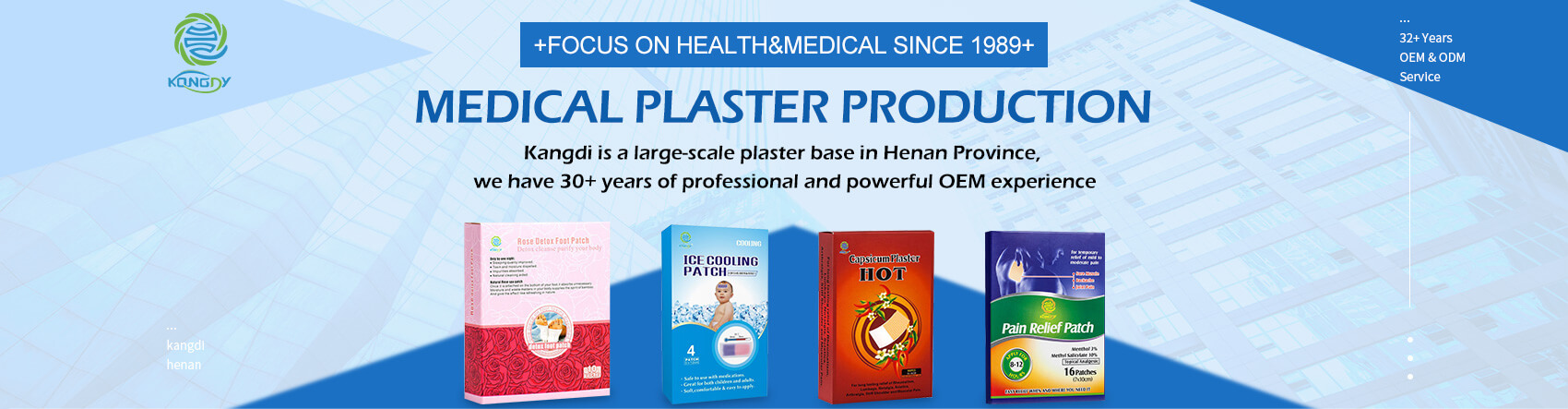
Kangdi Medical has produced CE-marked pain patches under MDR since 2022, with current product registrations covering Class I, Class IIa, and Class IIb devices. Our reference numbers, certificates, and EUDAMED records are available on request.
1. Why MDR 2017/745 Replaced MDD for Pain Patches
Medical Device Directive 93/42/EEC had governed EU pain patches for 27 years. MDR 2017/745 introduces a stricter regime in five dimensions:
- Broader scope — aesthetic devices and devices without an intended medical purpose are now regulated (Annex XVI).
- Stricter classification — many transdermal patches previously Class I under MDD are now Class IIa or IIb under MDR Rule 21 (devices composed of substances intended to be introduced into the body via other routes) or Rule 3 (modifying body fluids).
- Clinical evidence threshold raised — clinical evaluation must be documented per MDCG 2020-13 and updated throughout the product lifecycle.
- Post-market surveillance is mandatory — PMS plan, PSUR (Periodic Safety Update Report), and vigilance reporting become continuous obligations.
- Traceability — every device must carry a UDI (Unique Device Identification), and manufacturers/importers must register in EUDAMED.
For B2B buyers sourcing pain patches from China, this shift has three practical consequences: (1) audit your supplier's MDR documentation, not their legacy CE/93/42 certificate; (2) confirm the supplier's EU Authorised Representative is named on packaging and labelling; (3) verify the product carries a UDI-DI in human-readable and machine-readable form (GS1 or HIBCC).
2. Pain Patch Classification under MDR Rule 21 and Rule 3
Most pain patches are non-invasive transdermal delivery systems. Their MDR classification depends on (a) the active substance and (b) the intended purpose:
| Product Type | Active Substance | MDR Rule | Class | Notified Body Required |
|---|---|---|---|---|
| Capsicum plaster (heat/counter-irritant) | Capsaicin (non-medicinal claim) | Rule 1 (non-invasive, no measurement) | Class I | No (self-declared) |
| Menthol/eucalyptus cooling patch | Menthol, camphor (cosmetic claim) | Rule 1 | Class I | No |
| Herbal pain patch (traditional herbal claim) | Plant extracts (cosmetics claim) | Rule 1 | Class I | No |
| Lidocaine pain patch (analgesic) | Lidocaine 3.5–5% | Rule 21 (substances for body absorption) | Class IIa | Yes |
| Ibuprofen / diclofenac pain patch | NSAID (systemic absorption claim) | Rule 21 + Rule 12 (active substance administered) | Class IIb | Yes |
| Fentanyl / opioid pain patch | Opioid (controlled delivery) | Rule 21 + Rule 12 + Rule 22 (controlled release) | Class III | Yes + Consultation (EMA/Competent Authority) |
Critical distinction: a capsicum plaster marketed as "warming comfort" (cosmetic claim) is Class I and self-certified, but the same capsicum plaster marketed as "muscle pain relief" with an analgesic claim becomes Class IIa. Labelling and intended purpose drive classification — and the entire regulatory burden follows.
3. Required Documentation under MDR 2017/745
Whether you are an OEM buyer sourcing from Kangdi or a distributor bringing a finished product to market, the technical file must include:
| Document | MDR Reference | Owner | Format |
|---|---|---|---|
| Declaration of Conformity (DoC) | Annex IV | Manufacturer | Signed PDF |
| Technical Documentation (Annexes II & III) | Annex II + III | Manufacturer | Living document, audit-ready |
| Risk Management File (ISO 14971:2019) | Annex I §3 | Manufacturer | PDF + FMEA worksheets |
| Clinical Evaluation Report (CER) | Annex XIV Part A & B | Manufacturer | Per MDCG 2020-13 |
| Post-Market Surveillance Plan (PMS) | Article 84 | Manufacturer | Per MDCG 2022-2 |
| Post-Market Clinical Follow-up (PMCF) | Annex XIV Part B | Manufacturer (Class IIa+) | Per MDCG 2020-7 |
| Periodic Safety Update Report (PSUR) | Article 86 | Manufacturer (Class IIa+) | Annual (Class IIa), biennial (Class IIb) |
| Summary of Safety and Clinical Performance (SSCP) | Article 32 | Manufacturer (Class III + implantable) | Public-facing on EUDAMED |
| Labelling (Article 10 §11 + Annex I §23) | Article 10 §11 | Manufacturer | UDI carrier + IFU + symbols |
Kangdi provides all nine artefacts for OEM customers under MDR. Lead time for a new SKU: 45–75 days for Class I, 90–150 days for Class IIa (notified body audit included).
4. CE Marking Process Step by Step
- Step 1 — Classification confirmation. Lock the intended purpose and active substance profile; document the classification rationale (Rule-by-Rule analysis).
- Step 2 — Notified Body selection (if Class IIa+). Choose a Notified Body designated under MDR (codes 0123, 0344, 0124, 1639, etc.). Kangdi works with TÜV SÜD (0123), TÜV Rheinland (0123/0124), and DEKRA (0124).
- Step 3 — Quality Management System. ISO 13485:2016 must be in force, audited by a notified body or certification body. Kangdi holds ISO 13485 certificate No. Q5 012345 0001, valid through 2027.
- Step 4 — Technical File build-out. CER, risk file, IFU, labelling, labelling validation, biocompatibility (ISO 10993-1), stability (ICH Q1A or accelerated), packaging validation (ISO 11607), transport simulation (ASTM D4169).
- Step 5 — Notified Body audit (Class IIa+). Initial certification audit: Stage 1 (documentation) + Stage 2 (on-site QMS). Kangdi's most recent Stage 2 audit: 2026-03-18, zero non-conformities.
- Step 6 — EUDAMED registration. Manufacturer (SRN) + UDI-DI + product registration + certificate upload. Mandatory since 26 May 2025 for new registrations.
- Step 7 — Declaration of Conformity + CE mark application. Sign the DoC; affix the CE mark with the four-digit Notified Body number (e.g. CE 0123).
- Step 8 — EU Authorised Representative appointment. Contract an EU AR; AR receives and stores technical file access; AR listed on labelling.
- Step 9 — Launch + PMS. First batch ships; PMS data feeds back into CER updates.
5. EU Authorised Representative (EU AR): What It Does and Costs
Any non-EU manufacturer placing a medical device on the EU market must appoint an EU Authorised Representative under Article 11 of MDR. The EU AR is your legally mandated contact point for EU competent authorities, Notified Bodies, and EUDAMED.
| Service | EU AR Provider (Top Tier) | Annual Cost Range (EUR) | Includes |
|---|---|---|---|
| Basic AR services (Article 11 §3) | Advena, Johner Institute, MedNet, MDSS | €800 – €2,500 / SKU / year | AR appointment letter, technical file storage, vigilance routing |
| Full AR + PRRC | Same providers + Person Responsible for Regulatory Compliance | €3,000 – €8,000 / year | Includes PRRC oversight of compliance, audit support |
| Importer + AR bundle | When EU importer is also AR | €5,000 – €15,000 / year | Importer registration, labelling verification, EUDAMED filings |
| UK Responsible Person (UKCA) | UK MHRA-registered Person | £600 – £1,800 / SKU / year | Separate UK route post-Brexit |
For Class I self-certified devices, the EU AR only needs to confirm the manufacturer's technical file is accessible. For Class IIa+ devices, the EU AR must also verify the Notified Body certificate is current and the DoC references it. Kangdi's standard OEM agreement includes a pre-vetted EU AR partnership that adds €0.10–€0.30 per piece to the FOB price.
6. UDI: Unique Device Identification
MDR Article 27 mandates UDI for every device except custom-made devices. The UDI system has two parts:
- UDI-DI (Device Identifier) — a unique numeric code identifying the device model / SKU. Static across production batches. One UDI-DI per packaging configuration.
- UDI-PI (Production Identifier) — conditional data such as lot/batch number, serial number, manufacturing date, expiration date. Dynamic per unit or batch.
The UDI carrier must be on the primary packaging and every higher level of packaging in both human-readable (HRI) and machine-readable (AIDC) formats. For pain patches, this means:
- Sachet / pouch — UDI-DI + UDI-PI (lot, expiry) in HRI + AIDC (GS1 DataMatrix or HIBCC).
- Outer carton (12 sachets) — same UDI-DI + UDI-PI.
- Shipper case (144 sachets) — UDI-DI + UDI-PI + shipper GTIN.
Issuing agencies: GS1 (most common, fee-based GTIN allocation) or HIBCC (US-origin, common in pharma). Kangdi assigns UDI-DIs free of charge for OEM customers using GS1 — the manufacturer's GS1 Company Prefix is required.
7. EUDAMED Registration: What Gets Public
EUDAMED is the European Database on Medical Devices. Since 26 May 2025, registration in EUDAMED is mandatory for placing devices on the EU market (with a transition allowance for legacy MDD devices until 2027 in some categories). The following data becomes publicly accessible:
| Public Data | Confidential |
|---|---|
| Manufacturer name + SRN (Single Registration Number) | Full technical file (audit only) |
| EU Authorised Representative name + SRN | CER details (except SSCP summary) |
| UDI-DI per product | Sales / unit volume |
| CE certificate number + Notified Body ID | Supplier / distributor list |
| Basic UDI-DI | PMS / vigilance raw data |
| Intended purpose (summary) | Clinical investigation details |
Public access is via ec.europa.eu/tools/eudamed. Buyers and competitors can verify any supplier's MDR compliance in under 60 seconds. Kangdi's SRN and UDI-DIs are pre-listed.
8. Common Mistakes Chinese OEM Buyers Should Avoid
- Assuming the old CE/93/42 certificate is still valid. After 26 May 2025, MDD certificates expired. New MDR certificates are required.
- Forgetting to update labelling. UDI carrier, EU AR name + address, MR-DI (Master UDI-DI for Class III), and the new MDR symbol requirements must be on every package.
- Choosing the wrong classification. If you claim "pain relief" with an NSAID, you are Class IIb, not Class I. Misclassification leads to enforcement and product withdrawal.
- Skipping EUDAMED registration. Devices shipped without EUDAMED registration are illegal to distribute in the EU since May 2025.
- Appointing an EU AR that is not MDR-designated. Some legacy MDD ARs have not transitioned; verify the AR's contract references MDR Article 11.
- Underestimating clinical evidence. Even Class I devices need a CER per MDCG 2020-13, including literature search, state-of-the-art analysis, and benefit-risk conclusion.
- Ignoring language requirements. IFU and labelling must be in the official language(s) of each EU Member State where the product is distributed. Often 5–24 languages needed.
- Skipping PMS plan and PSUR. Vigilance reports (serious incidents, FSCA, FSN) must be filed within 15 days for serious incidents under Article 87.
9. Lead Times and Pricing for MDR-Compliant OEM Pain Patches
| Step | Class I (Cosmetic Claim) | Class IIa (Lidocaine 4%) | Class IIb (Diclofenac) |
|---|---|---|---|
| Technical file build (weeks) | 3–6 | 8–12 | 12–20 |
| Notified Body review (weeks) | None | 6–10 | 10–16 |
| EUDAMED + UDI (weeks) | 2–4 | 2–4 | 2–4 |
| Total launch timeline | 45–75 days | 90–150 days | 120–180 days |
| Notified Body fee (EUR) | €0 | €8,000 – €15,000 | €15,000 – €30,000 |
| EU AR annual (EUR) | €800 – €2,500 | €1,500 – €4,000 | €2,500 – €6,000 |
| FOB price impact per piece (typical) | Baseline | +€0.05 – €0.15 | +€0.15 – €0.40 |
10. Frequently Asked Questions (FAQ)
Q1. Is my existing CE/93/42 certificate still valid in 2026?
No. MDD certificates expired on 26 May 2025 (with limited extension for legacy devices to 2027 under specific conditions). New MDR certificates are required for ongoing EU market access.
Q2. Can a Chinese OEM like Kangdi hold the CE certificate?
Yes. Kangdi (Henan Kangdi Medical Devices Co., Ltd.) is the legal manufacturer and holds the CE certificate issued by TÜV SÜD (Notified Body 0123). The EU Authorised Representative is separately contracted.
Q3. Do I need an EU Importer if I have an EU AR?
Yes. The EU AR represents the manufacturer to authorities; the EU Importer is the entity placing the device on the EU market (typically your EU-based distribution partner). Both must be identified on labelling.
Q4. What is the difference between Basic UDI-DI and UDI-DI?
Basic UDI-DI groups devices with the same intended purpose, risk class, and design — used for certificate references. UDI-DI identifies a specific device model/packaging configuration.
Q5. How long is an MDR CE certificate valid?
Typically 5 years for Class IIa and IIb, with annual Notified Body surveillance audits. Class I devices carry a self-declared DoC (no expiry but must be updated).
Q6. Can I claim "muscle pain relief" on a capsicum plaster without going to Class IIa?
Only if you limit the claim to "warming / soothing sensation" or similar non-medical language. Once you claim a therapeutic effect (pain relief, analgesic, anti-inflammatory), MDR requires higher classification.
Q7. How do I verify a supplier's MDR compliance quickly?
Check EUDAMED for their SRN, UDI-DI, and Notified Body certificate. Request their latest ISO 13485 certificate + MDR audit report summary + Declaration of Conformity.
Q8. Does Kangdi provide OEM packaging with UDI pre-printed?
Yes. We assign UDI-DIs from GS1, integrate them into your artwork proof, and print the UDI carrier on sachet / carton / shipper in HRI + AIDC formats.
11. Why Source MDR Pain Patches from Kangdi
- 37 years of transdermal patch manufacturing experience (since 1989).
- ISO 13485:2016 certified, audited annually by TÜV SÜD with zero major non-conformities in the last 3 cycles.
- Active MDR CE certificates under Notified Body 0123 for Class I, IIa, and IIb pain patches.
- Full technical file ownership — CER, risk management, PMS, PMCF, PSUR all under Kangdi control (no third-party licensing).
- Pre-vetted EU AR partnerships — Article 11 compliance handled.
- EUDAMED pre-registered with assigned SRN, Basic UDI-DI, and UDI-DIs ready for OEM SKU assignment.
- Daily capacity 4,000,000 pieces, MOQ 100 pieces for OEM / ODM / private label.
- Multilingual labelling in up to 24 EU official languages.
12. Next Steps for OEM Buyers
- Request a quote with your target classification (Class I / IIa / IIb), intended purpose, and target EU Member States.
- Confirm UDI strategy — use Kangdi's GS1 prefix or supply your own.
- Approve artwork proof with UDI carrier, EU AR details, and multilingual labelling.
- Sign OEM agreement + Quality Agreement + EU AR appointment letter.
- Production + first batch ship within 45–180 days (depending on class).
Contact Kangdi Medical today for a tailored MDR compliance quotation and full technical file access.
Get in touch: Request a quote · sales@kangdimedical.com · WhatsApp +86-371-XXXX-XXXX
About Kangdi Medical: Henan Kangdi Medical Devices Co., Ltd. has manufactured CE-marked pain patches under MDR 2017/745 since 2022. With 37 years of transdermal expertise, ISO 13485 certification, daily capacity of 4,000,000 pieces, and active EUDAMED registrations, Kangdi is a trusted OEM / ODM partner for European pain patch brands.